Table of contents
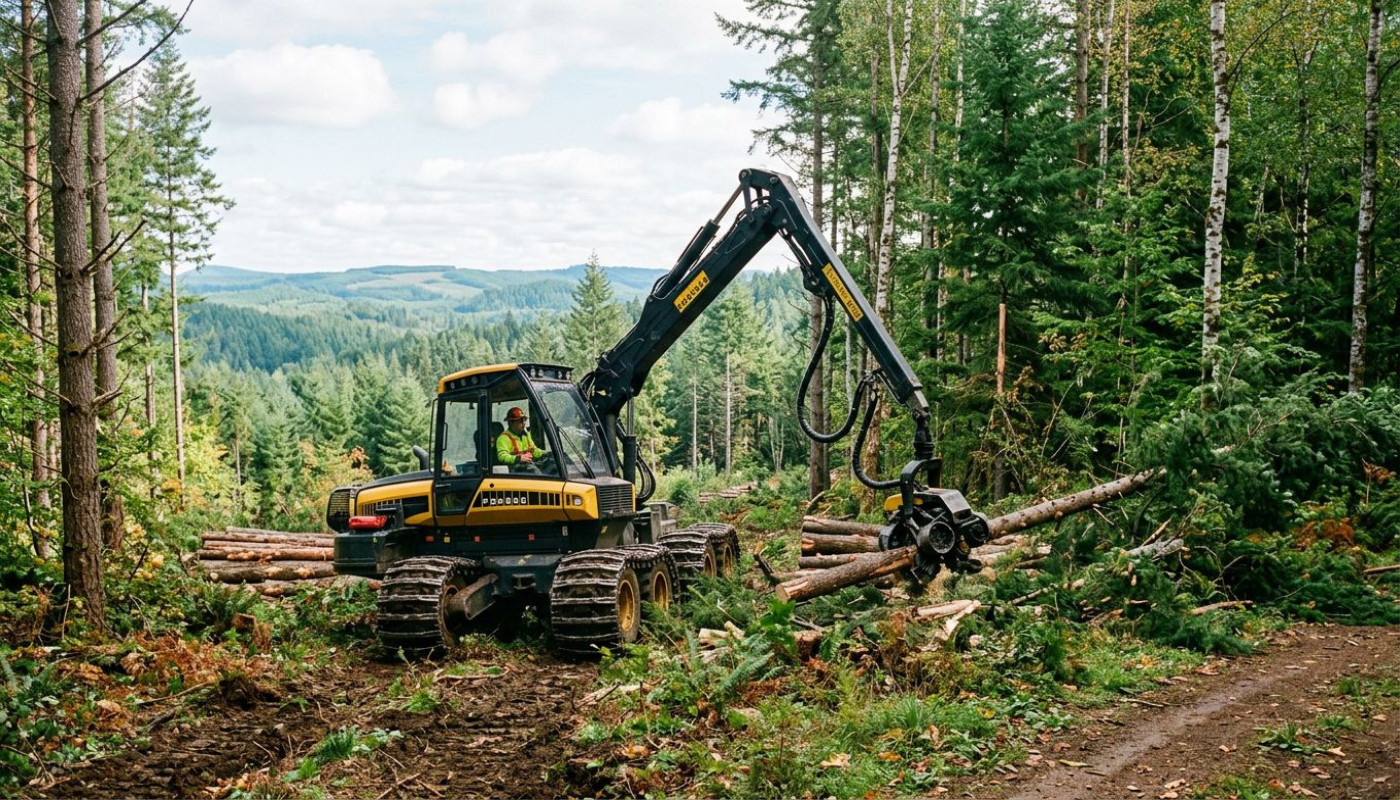
Forests are no longer managed with a chainsaw-and-compass mindset. Across Europe and North America, tighter carbon accounting, stricter biodiversity rules, and a labour market under stress are forcing woodland owners and contractors to rethink how they harvest, thin, and maintain stands, and the biggest shift is happening inside the cab. Modern forestry machinery, increasingly sensor-driven and data-connected, is changing what “sustainable” looks like on the ground, from soil protection to traceability and safety.
In the cab, sustainability turns measurable
It is no longer enough to promise “low impact”; the expectation is proof. In many forestry regions, sustainable management is being pushed from principle into practice by a mix of certification schemes, public procurement rules, and climate reporting requirements, and that pressure is accelerating the adoption of machines that can document what they do. Harvesters and forwarders now commonly integrate onboard computers that record tree dimensions, product assortments, and georeferenced operations, and when that data flows into planning software, managers can compare what was scheduled with what was actually cut, where, and when.
The operational gains are not just administrative. Modern heads can optimise bucking in real time, using diameter and length measurement to reduce waste and to steer more volume into higher-value assortments, and that matters because waste in harvesting is not only economic, it is also material that must be moved, processed, and often transported again. In parallel, machine control systems and guidance functions help operators stay within designated corridors, limit unnecessary passes, and protect regeneration areas, and over a season those small efficiencies add up to fewer machine hours, lower fuel use, and less disturbance.
The shift toward measurable sustainability is also visible in timber traceability. Several markets are tightening due diligence around legal origin and supply-chain transparency, and digital records from harvesting to roadside can support compliance, audits, and customer demands for documentation. For contractors, this has become a competitive differentiator: the ability to produce clean, structured operational data can be as valuable as the ability to produce cubic metres. For woodland owners, it changes conversations with regulators and communities, because discussions can be grounded in maps, machine logs, and post-operation assessments rather than assurances.
None of this makes forestry “light.” Heavy machinery remains heavy, and sustainability claims collapse quickly if ground pressure, rutting, and residual stand damage are poorly managed. But the direction is clear: when machines measure more, managers can manage more, and the definition of good practice becomes increasingly evidence-based rather than anecdotal.
Soil, water, trees: the real battlefield
Ask any experienced forester where sustainability is won or lost, and the answer often sits underfoot. Soil compaction and rutting can impair root growth, reduce infiltration, and increase erosion risk, especially on sensitive sites or during wet periods, and repairing that damage is slow and costly. Modern forestry machinery is therefore being redesigned around mobility and ground protection, with wider tyres, bogie tracks, and improved weight distribution, and the operational playbook is changing with it: more emphasis on designated extraction trails, seasonal planning, and real-time decisions based on site conditions.
Technology is helping, but it does not replace judgement. Some systems support operators with crane automation and stability control, reducing sudden movements that churn the ground, and in steep terrain, traction management and chassis design can lower the risk of wheel spin that scars soils and damages roots. In thinning operations, where residual stand quality matters as much as removed volume, modern cranes, better visibility, and assisted boom control can reduce bark damage and broken tops, and those “invisible” improvements are central to long-term productivity and biodiversity, because damaged trees invite pests and diseases and can destabilise stands.
Water protection is another pressure point, increasingly scrutinised by regulators and local communities. Buffer zones around streams and wetlands are common requirements, and machines equipped with mapping and positioning tools make it easier to respect them consistently, even for rotating crews or subcontractors. When crossings are unavoidable, planning for temporary mats, culverts, or designated fords becomes part of the job, and modern logistics can help reduce the number of crossings by optimising extraction routes and roadside landings.
There is also a quieter sustainability issue: the carbon footprint of operations. Fuel remains a major operating cost, and manufacturers and contractors are responding with engine efficiency improvements, smarter hydraulics, and idle reduction strategies, and in some regions, pilot deployments of alternative fuels and hybrid concepts are being tested. The fastest gains, however, often come from planning and machine utilisation, because an efficient operation that avoids rework and empty travel typically emits less per cubic metre. Soil protection, residual stand care, and fuel efficiency are not separate stories; they are the same story, written in different parts of the forest.
Automation is changing who can work
Forestry has a recruitment problem, and machines are being asked to solve part of it. Many countries report aging workforces and difficulty attracting new operators for demanding, isolated jobs, and in that context, the rise of operator-assist features is not simply about productivity, it is about keeping skilled people in the sector and making the learning curve less punishing. Crane automation, semi-automatic boom movements, and smarter head controls can reduce fatigue and repetitive strain, and a less exhausted operator makes better decisions on both safety and environmental care.
Safety itself is a sustainability metric, even if it is rarely framed that way. Modern cabs offer better protection, ergonomics, and visibility, and remote monitoring can reduce the need for mechanics or supervisors to enter hazardous zones unnecessarily. At the same time, connected machines raise new questions: who owns the data, how it is shared, and whether smaller contractors can keep up with the pace of upgrades. A digital divide can emerge, where well-capitalised fleets gain advantages in reporting and optimisation while smaller outfits struggle, and that has consequences for local economies and for the resilience of wood supply chains.
Automation also changes the relationship between planning and execution. When harvesters capture detailed production data, managers can refine prescriptions, better match machines to stand conditions, and forecast deliveries with greater accuracy, and that can stabilise relationships with mills and energy plants that rely on consistent supply. But automation is not a magic wand: it can standardise best practice, yet it can also standardise mistakes if planning is poor. Sustainable woodland management still requires site-specific knowledge, and the best systems are those that support human decisions rather than replace them.
The competitive landscape is shifting accordingly. Contractors increasingly market not only capacity but also quality of execution, environmental compliance, and documentation, and woodland owners are learning to ask sharper questions about equipment, operator training, and post-harvest restoration. In this environment, machinery becomes a proxy for governance, because the tools used often determine whether intentions can be delivered consistently across thousands of hectares.
The buying decision now includes services
A machine is no longer just a machine; it is a platform. Buyers are weighing dealer support, uptime guarantees, parts availability, and software compatibility as heavily as horsepower and reach, because downtime in forestry is expensive and scheduling windows can be narrow. In many regions, contractors plan around weather, road restrictions, and sensitive seasons for wildlife, and when a breakdown pushes work into wetter weeks, the environmental risk rises along with costs. Reliability, in other words, is not merely a financial concern, it is a sustainability concern.
Services are expanding as well. Remote diagnostics can flag issues early, predictive maintenance can reduce catastrophic failures, and training programmes can improve operator technique, and those elements can make the difference between a tidy site and a damaged one. Fleet management tools allow companies to track fuel consumption, idle time, and productivity across operators and stands, and that data supports internal benchmarking and more transparent discussions with clients, especially when contracts include environmental performance expectations.
For companies looking to understand what is available on the market, compare solutions, or explore how equipment and services are packaged, the weblink provides a starting point for navigating modern forestry machinery and related offerings. The key is to approach procurement with the same discipline applied to silviculture: define the site constraints, the expected assortments, the compliance needs, and the service level required to deliver them, and then assess equipment accordingly.
Price remains decisive, but the calculus is evolving. A cheaper machine that burns more fuel, damages soils, or cannot provide the documentation required by buyers may cost more in the long run, and financing structures increasingly reflect that reality through leasing, service bundles, and uptime-based agreements. Public subsidies and incentive programmes, where they exist, also influence decisions, particularly when governments tie support to climate and biodiversity outcomes. The purchase order is becoming a management strategy in miniature, and modern forestry machinery sits at the centre of that shift.
Planning your next move in the woods
Before committing budget, map constraints, and lock the calendar early. Ask suppliers about training, maintenance response times, and data compatibility, and request clear terms on uptime and software updates. Check whether local or national programmes support investments tied to emissions reduction or biodiversity protection, and reserve equipment well ahead of peak season to avoid forced scheduling in risky weather windows.
On the same subject